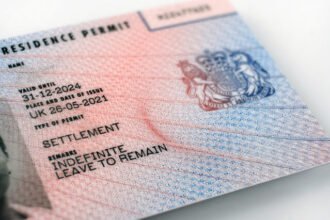
Germany is one of the most attractive destinations in the world for international students, not only because of its high-quality education system but also because of the strong post-study employment opportunities it offers. Every year, thousands of international graduates successfully remain in Germany after completing their studies by transitioning from a student residence permit to a work permit. Understanding this transition process is critical, as it determines whether you can legally stay, work, and build a long-term career in Germany.
This guide provides a detailed, up-to-date, and practical explanation of how to move from a student residence permit to a work permit in Germany. It covers eligibility, legal pathways, application steps, required documents, timelines, common mistakes, and long-term options such as permanent residence and EU Blue Card eligibility.
Understanding the Legal Framework
Residence and employment rights for international students and graduates in Germany are governed by the German Residence Act (Aufenthaltsgesetz). While a student residence permit allows limited employment during studies, full employment rights are only granted under specific post-study residence titles. The transition must be completed before your student permit expires to avoid overstaying, which can negatively affect future immigration applications.
Official legal guidance and application procedures are published by the German Federal Office for Migration and Refugees at https://www.bamf.de and the Federal Foreign Office at https://www.auswaertiges-amt.de.
Employment Rights on a Student Residence Permit
Before discussing the transition, it is important to understand the limits of a student residence permit. International students in Germany are allowed to work up to 120 full days or 240 half days per year, or take up student assistant roles at universities without time restrictions. These employment rights are strictly regulated and do not allow long-term or full-time professional employment after graduation.
Once studies are completed, the student residence permit becomes invalid for employment purposes unless it is converted to a post-study or work-related residence permit.
Step One: Completing Your Studies
The transition process begins only after successful completion of your studies. This usually means you have received official confirmation from your university, such as a certificate of completion, transcript, or graduation letter. Your final degree certificate is not always required immediately, but proof that you have completed all academic requirements is essential.
At this stage, your student residence permit typically remains valid until its expiration date. You should use this time strategically to prepare your next application.
Option One: The 18-Month Job Seeker Residence Permit
The most common pathway after graduation is applying for an 18-month residence permit for the purpose of seeking employment related to your qualification. This permit allows you to stay in Germany and work without restrictions while searching for a qualified job.
To be eligible, you must have completed a recognized degree at a German higher education institution and be able to support yourself financially. Financial proof may include savings, income from employment, or a formal obligation letter.
During these 18 months, you may work in any job, including non-qualified roles, to support yourself while seeking suitable employment. Once you secure a job that matches your qualification, you can transition to a work permit or EU Blue Card without leaving Germany.
Official details on this permit are available at https://www.make-it-in-germany.com, the German government’s official portal for skilled migration.
Option Two: Direct Transition to a Work Permit
If you secure a qualified job offer before or immediately after graduation, you may apply directly for a work permit without using the 18-month job seeker period. This option is particularly advantageous for graduates in high-demand fields such as engineering, IT, healthcare, and natural sciences.
The job must be related to your academic qualification, and employment conditions must be comparable to those of German employees. In many cases, approval from the Federal Employment Agency is required, although graduates of German universities often benefit from simplified procedures.
Option Three: The EU Blue Card
The EU Blue Card is one of the most attractive residence titles for highly qualified professionals. Graduates from German universities are well positioned to qualify for this permit if they meet the minimum salary threshold and hold a job related to their degree.
As of recent regulations, the general minimum salary threshold is lower for graduates in shortage occupations such as mathematics, IT, natural sciences, engineering, and medicine. The EU Blue Card offers faster access to permanent residence and greater mobility within the EU.
Up-to-date salary thresholds and eligibility criteria are published at https://www.bamf.de.
Required Documents for the Transition
While specific requirements may vary slightly by local immigration office (Ausländerbehörde), the following documents are generally required when transitioning from a student residence permit to a work permit: a valid passport, current residence permit, proof of completed studies, employment contract or job offer, job description, proof of salary, health insurance coverage, proof of address registration, and biometric photos.
Additional documents may include a curriculum vitae, academic transcripts, and confirmation from the employer regarding working conditions. It is essential to check local requirements in advance, as missing documents are a common cause of delays.
Application Process and Where to Apply
Applications must be submitted to the local immigration office responsible for your place of residence. Many cities require online appointment booking, and waiting times can be long, so early planning is essential.
If your student residence permit is still valid at the time of application, you are generally allowed to remain in Germany while your new application is being processed. In some cases, a temporary certificate (Fiktionsbescheinigung) is issued to confirm your legal stay and employment rights during processing.
Processing Times and Fees
Processing times vary significantly depending on the city and workload of the immigration office. On average, applications may take anywhere from four weeks to three months. Fees typically range from €75 to €100 for most work permits, while EU Blue Card fees may differ slightly.
Current fee structures are available through local immigration offices and the official government portal https://www.make-it-in-germany.com.
Common Mistakes to Avoid
One of the most common mistakes is waiting until the student residence permit has expired before applying. This can lead to legal complications and, in some cases, forced departure. Another frequent issue is accepting a job that does not match the academic qualification, which may result in application refusal.
Incomplete documentation, insufficient salary levels, and lack of health insurance are also common reasons for delays or rejection. Careful preparation and early consultation with the immigration office can help avoid these problems.
Working While Your Application Is Pending
If you apply for a job seeker permit, you may work without restrictions during the 18-month period. If you apply directly for a work permit or EU Blue Card, your right to work while the application is pending depends on your current permit and the temporary confirmation issued by the immigration office.
Always confirm employment rights in writing before starting a new job to avoid unintentional violations of immigration law.
Transitioning to Permanent Residence
One of the major advantages of working in Germany after graduation is the clear pathway to permanent residence. Holders of a standard work permit may apply for permanent settlement after several years of employment, while EU Blue Card holders can qualify much faster, sometimes within 21 to 33 months depending on language proficiency.
Permanent residence grants unrestricted access to the labor market and long-term security of stay. Official requirements are outlined at https://www.bamf.de.
Long-Term Career and Citizenship Prospects
After obtaining permanent residence, former international students may eventually qualify for German citizenship, provided they meet residence duration, language proficiency, and integration requirements. Germany’s recent reforms have made long-term settlement more accessible for skilled migrants who contribute economically and socially.
Citizenship information is available through the Federal Ministry of the Interior at https://www.bmi.bund.de.
Practical Tips for a Smooth Transition
Start job searching early, ideally before graduation. Maintain valid health insurance at all times. Keep copies of all academic and employment documents. Register your address promptly after any move. Communicate proactively with your immigration office and employer.
Using official resources such as https://www.make-it-in-germany.com and https://www.bamf.de ensures that you rely on accurate and current information rather than unofficial sources.
Conclusion
Transitioning from a student residence permit to a work permit in Germany is a well-defined but time-sensitive process that requires careful planning, accurate documentation, and a clear understanding of legal pathways. Whether you choose the 18-month job seeker permit, a direct work permit, or the EU Blue Card, Germany offers one of the most graduate-friendly immigration systems in Europe.
By acting early, securing suitable employment, and following official guidance, international graduates can successfully move from education to long-term professional life in Germany, laying the foundation for permanent residence and, eventually, citizenship in one of Europe’s strongest economies.