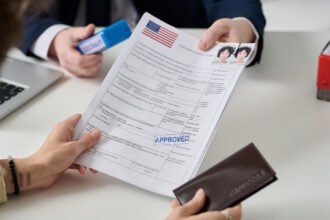
Seeking specialized medical treatment in the United States is a path that many international patients pursue due to the country’s advanced healthcare facilities, cutting-edge technology, and highly skilled medical professionals. For foreign nationals who require medical care not readily available in their home country, obtaining a US Medical Treatment Visa is often the first and most critical step. This visa allows patients to enter the United States temporarily to access healthcare services ranging from complex surgeries to advanced therapies.
Understanding the application process, eligibility requirements, and supporting documentation is crucial to ensuring a smooth experience. This guide provides an in-depth overview of how to apply for a US Medical Treatment Visa, the requirements, and tips for strengthening an application.
What Is a US Medical Treatment Visa?
A US Medical Treatment Visa is a form of the B-2 Tourist Visa that is specifically issued to foreign nationals traveling to the United States for medical purposes. While the B-2 visa typically covers tourism, family visits, and leisure, it also permits medical travel. Unlike immigrant visas, the B-2 Medical Treatment Visa is strictly temporary and does not grant permanent residency.
Applicants must demonstrate that their travel is solely for medical treatment and that they have the resources and arrangements necessary to cover their healthcare costs and living expenses while in the United States. More details are outlined on the US Department of State – Visitor Visa page.
Eligibility Requirements for a Medical Treatment Visa
To qualify for a US Medical Treatment Visa, applicants must meet specific requirements set by US immigration law. These include:
- Medical necessity: The treatment sought must not be available in the applicant’s home country or must be of higher quality in the US.
- Medical diagnosis letter: A detailed diagnosis and treatment recommendation from a local physician.
- Acceptance by a US medical facility: Evidence that a hospital or medical professional in the United States has agreed to provide treatment.
- Proof of financial means: Demonstrating the ability to pay for medical expenses, travel costs, and living arrangements during the stay.
- Temporary intent: Proof that the applicant intends to return to their home country after treatment and does not plan to overstay the visa.
Failure to establish these criteria may lead to a visa denial.
Required Documents for the Application
Applicants must prepare a strong portfolio of documents to support their application. Key documents include:
- Valid passport with at least six months’ validity beyond the planned stay.
- Form DS-160 confirmation page, the standard non-immigrant visa application form.
- Visa application fee receipt, proving payment of the required fee.
- Medical records from the applicant’s physician outlining the diagnosis and necessity of treatment in the US.
- Letter from the US medical facility confirming acceptance of the patient and outlining the treatment plan, estimated duration, and cost.
- Financial evidence, such as bank statements, affidavits of support, or proof of medical insurance coverage that will apply in the US.
- Proof of ties to home country, such as employment letters, property ownership, or family commitments, to establish intent to return.
Each piece of documentation reinforces the applicant’s case that the visit is temporary and medically necessary.
The Step-by-Step Application Process
The process of applying for a US Medical Treatment Visa involves multiple stages:
Step 1: Complete Form DS-160
Applicants must complete the DS-160 Online Nonimmigrant Visa Application form available on the Consular Electronic Application Center. After completion, the confirmation page with a barcode must be printed and included in the application package.
Step 2: Pay the Visa Application Fee
The standard fee for a B-2 visa is USD 185 (as of 2025). This fee is non-refundable and must be paid before scheduling the visa interview.
Step 3: Schedule the Visa Interview
Applicants between the ages of 14 and 79 are generally required to attend an in-person interview at the nearest US Embassy or Consulate. Due to high demand, interview slots should be booked as early as possible.
Step 4: Prepare Supporting Documentation
Applicants should gather all medical and financial documents, including letters from doctors, treatment cost estimates, and evidence of funds. Organizing these documents systematically increases the chances of a successful interview.
Step 5: Attend the Visa Interview
During the interview, a consular officer will ask questions to determine the validity of the medical need, the availability of funds, and the applicant’s intent to return home. Honest and consistent answers are essential. Supporting documents may be reviewed to confirm the case.
Step 6: Wait for Visa Processing
Visa processing times vary by embassy and individual circumstances. In some cases, additional administrative processing may be required, which can extend wait times. Applicants are advised to apply well in advance of the planned treatment date.
Demonstrating Financial Capability
One of the most critical elements of a medical treatment visa application is proving the ability to cover medical costs and associated expenses. Since medical care in the United States can be expensive, consular officers look for credible evidence that the applicant or their sponsor has sufficient funds.
Acceptable financial proof includes:
- Recent bank statements showing adequate balances.
- Proof of income, such as pay slips or tax returns.
- Affidavit of support (Form I-134) from a US-based relative or sponsor.
- Health insurance documentation that extends to US-based medical treatment.
The more comprehensive the financial evidence, the stronger the application.
Common Challenges and How to Overcome Them
Applicants often face hurdles during the process, but preparation can help overcome them.
- High treatment costs: Many applicants are denied if they cannot prove the ability to pay. Securing a sponsor or fundraising support may help.
- Insufficient medical evidence: Detailed documentation from both home and US doctors is essential. Vague letters often lead to rejection.
- Doubts about return intentions: Strong ties to the home country, such as family or employment, must be shown to convince the officer of temporary intent.
- Administrative delays: Applicants should apply early and allow for extended processing times.
Tips for a Strong Application
- Be transparent: Provide full and accurate details about the medical condition and treatment.
- Demonstrate preparation: Show that arrangements for treatment, accommodation, and funding are already in place.
- Bring originals and copies: At the visa interview, both original documents and photocopies may be requested.
- Maintain consistency: Ensure that information in medical records, financial documents, and interview responses align.
Alternatives to the B-2 Medical Treatment Visa
In some cases, other visa types may be more suitable:
- Humanitarian parole: For urgent cases where standard visa processing is not feasible, humanitarian parole may allow temporary entry for medical purposes.
- Immigrant visas: For individuals seeking permanent relocation due to ongoing treatment needs, other visa categories may be explored.
- Exchange visitor (J-1) visa: In cases where treatment is linked to a medical exchange program, the J-1 may be applicable.
Applicants should consult with an immigration attorney to explore the best path based on their circumstances.
Conclusion
Applying for a US Medical Treatment Visa requires careful planning, detailed documentation, and a clear demonstration of financial capability and temporary intent. The process can be demanding, but with thorough preparation, international patients can access world-class medical care in the United States.
By completing the DS-160 form, securing medical documentation, demonstrating sufficient funds, and preparing for the interview, applicants significantly increase their chances of approval. Ultimately, the US Medical Treatment Visa offers a vital opportunity for individuals seeking life-saving or specialized care that may not be available in their home countries.